









The gods had condemned Sisyphus to ceaselessly rolling a rock to the top of a mountain,
Whence the stone would fall back of its own weight.
They had thought with some reason
that there is no more dreadful punishment than futile and hopeless labor.
Nothing is told us about Sisyphus in the underworld.
Myths are made for the imagination.
As for this myth, one sees merely the whole effort
of a body straining to raise the huge stone
To roll it and push it up a slope a hundred times over;
One sees the face screwed up, the cheek tight against the stone,
The wholly human security of two earth-clotted hands.
At the very end of his long effort, the purpose is achieved.
Then Sisyphus watches the stone rush down in a few moments
Toward the lower world whence he will have to push it up again toward the summit.
He goes back down to the plain.
It is during that return, that pause, that Sisyphus interests me.
A face that toils so close to stones is already stone itself.
I see that man going back down with a heavy yet measured step
Toward the torment of which he will never know the end.
That hour like a breathing-space which returns as surely as his suffering,
That is the hour of consciousness.
At each of those moments when he leaves the heights
And gradually sinks toward the lairs of the gods,
He is superior to his fate.
He is stronger than his rock.
The workman of today works everyday in his life at the same tasks,
And his fate is no less absurd.
But it is tragic only at the rare moments when it becomes conscious.
Sisyphus knows the whole extent of his wretched condition:
It is what he thinks of during his descent.
There is no fate that can not be surmounted by scorn.
If the descent is thus sometimes performed in sorrow,
It can also take place in joy.
When the images of earth cling too tightly to memory,
It happens that melancholy arises in man's heart:
This is the rock's victory.
But crushing truths perish from being acknowledged.
Thus, Edipus at the outset obeys fate without knowing it.
But from the moment he knows, his tragedy begins.
Yet at the same moment, he realizes that the only bond
linking him to the world is the cool hand of a girl.
Then a tremendous remark rings out:
"Despite so many ordeals, my advanced age
And the nobility of my soul make me conclude that all is well."
"I conclude that all is well," says Edipus.
And that remark is sacred.
It echoes in the wild and limited universe of man.
It teaches that all is not, has not been, exhausted.
All Sisyphus' silent joy is contained therein.
His fate belongs to him.
The rock is still rolling.
La Dispute è un gruppo musicale statunitense originario di Grand Rapids, Michigan, formatosi nel 2004. Conosciuti per il loro stile post-hardcore emotivo e poetico, La Dispute fonde testi incisivi e spesso recitati a melodie che oscillano tra l'intensità del post-hardcore e la malinconia dell'emo, con influenze notevoli del rock progressivo. Il gruppo ha pubblicato tre album in studio: *Somewhere at the Bottom of the River Between Their Houses* (2013), *Panorama* (2016) e *Heavy Days* (2021). Tra i loro EP più noti figurano quelli della serie *Hear, Here*. La Dispute è apprezzata per la sua capacità di creare atmosfere intense e coinvolgenti, con testi che esplorano temi come il dolore, la perdita, l'amore e la ricerca di significato. Alcuni dei brani più rappresentativi del gruppo includono "King William", "The Last of the Light", "Circles" e "Woman (You Really Should See a Doctor)".
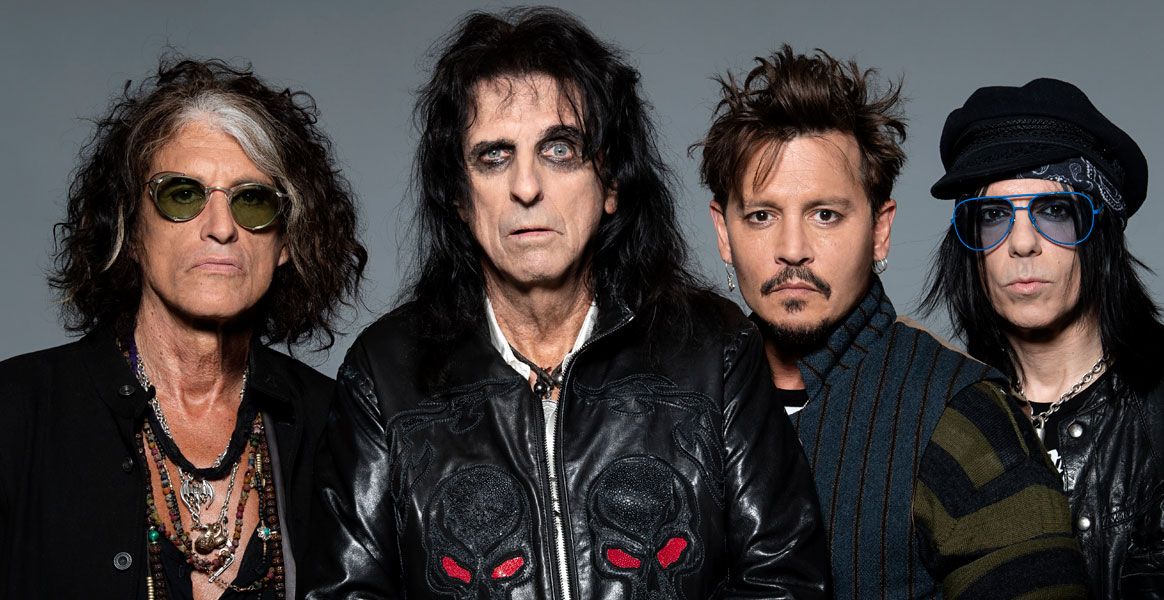
Il supergruppo di Alice Cooper e Johnny Depp è pronto a tornare in Italia con 2 date nel mese di settembre.
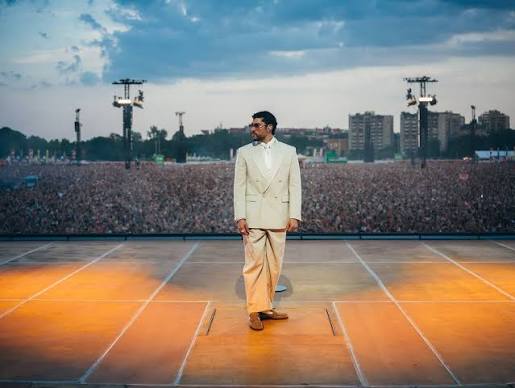
"Era uno dei concerti migliori della mia vita". Bad Bunny è tornato a parlare dell'evento tenuto sabato scorso all'Ippodromo La Maura nella zona San Siro di Milano. E la grandine riapre il problema sicurezza dell'impianto.

Noemi dovrà osservare 4 settimane di riposo dopo la caduta, ma dal 16 agosto sarà un tour de force per recuperare i live rinviati. Ecco tutte le date fino a settembre.

Lo scorso 13 luglio Paolo Belli era in bicicletta tra Correggio e Campagnola, in provincia di Reggio Emilia, per la sua solita sgambata, quando ha investito un uomo di 41 anni di nome Alessandro Mignani che, trasportato in ospedale, dopo 1 giorno in terapia intensiva, è deceduto.
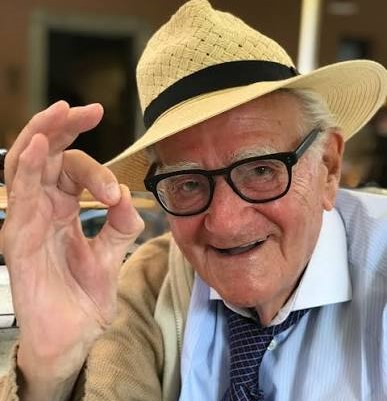
L'11 luglio Teddy Reno ha compiuto 100 anni! E' il primo cantante italiano a raggiungere questo traguardo.

Nella terza edizione di "Nuova Scena", talent dedicato al mondo rap in onda su Netflix, si sono aggiudicati la vittoria i cosentini Flextony e Tigerplug.

La radio è morta? No. Ma non è più il cancello d'ingresso. Negli ultimi anni qualcosa è cambiato ? radicalmente. Canzoni sconosciute esplodono in pochi giorni. Artisti senza contratto discografico raccolgono milioni di stream. E le radio? Arrivano dopo, non prima. Il pubblico ha preso il controllo. Il potere dei video brevi: 15 secondi che cambiano tutto TikTok ha trasformato le regole del gioco musicale. Una melodia che dura meno di venti secondi può diventare il suono di un'intera estate. Nel 2023, oltre il 70% delle canzoni entrate nella Billboard Hot 100 aveva avuto un'origine virale su piattaforme social prima di ricevere attenzione radiofonica.

Il 28 aprile 1986 la cantante Graziella Franchini, in arte Lolita, veniva ritrovata esanime e sfigurata nella camera del residence di Lamezia Terme in cui viveva ormai da un pò di tempo. L'omicidio è rimasto privo di colpevoli.

Da qualche parte nel mondo i Blue si sono riuniti davanti a uno schermo per vedere l'esibizione di Sal Da Vinci che canta "Per Sempre Si".

![Il testo SIX dei LA DISPUTE è presente anche nell'album Here, hear ii. [ep] (2008)](/images/albums/30497/19494.jpg "Il testo SIX dei LA DISPUTE è presente anche nell'album Here, hear ii. [ep] (2008)")
 Motosierra
 Billy Joe Shaver
 Chet Atkins
 Jennifer Warnes
 People Under The Stairs
 Joelma
 We Shot The Moon
 We Are Scientists
 Shaquille O'Neal
 Big City Rock
 Stryper
 O.C.
O.C.